Editors: Samantha Crow & Surendra Singh, Washington State University; Susan Addleman & Debbie Sutor, Oregon State University; Kurtis Schroeder & Doug Finkelnburg, University of Idaho
- Washington State University, Department of Crop and Soil Sciences, Technical Report 26-1
- Oregon State University, Department of Crop and Soil Science, Technical Report OSU-FDR-2026
- University of Idaho, Idaho Agricultural Experiment Station, TR0026-1
Table of Contents
- 2026 Field Days and Tours
-
Cooperative Personnel and Area of Activity
- Washington State University
- University of Idaho
- Oregon State University
2026 Field Days and Tours
- Western Wheat Workers Field Tour – June 4
- Horse Heaven Crop Tour – June 4
- Walla Walla Crop Tour – June 5
- Lind Field Day – June 11
- Harrington Crop Tour – June 12
- Douglas County Crop Tour – June 16
- Mayview (Spring Canola) Crop Tour – June 17
- Mayview (Cereals) Crop Tour – June 17
- Dayton Crop Tour – June 18
- Fairfield Crop Tour – June 18
- Spillman Farm Field Day – June 22
- WSU Wilke Farm Field Day – June 23
- Reardan Crop Tour – June 23
- Almira Crop Tour – June
- WSU Potato Field Day – June 25
- Bickleton Field Day – July 3
For more information on Washington State University events, see the Events Calendar on the Dept. of Crop and Soil Sciences site.
- Wasco County Crop Tour – June 1
- Sherman County Crop Tour – June 2
- Walla Walla Crop Tour – June 5
- Eureka Crop Tour – June 5
- OrganicWinter Grains Field Day – June 5
- Hermiston Field Day – June 8
- Pendleton Field Day – June 9
- Moro Field Day – June 10
- Morrow County Crop Tour – June 11
- Gilliam County Crop Tour – June 16
- KBREC Winter Cereal Day – June 17
- COAREC Field Day – June 18
- NE Oregon Cereal Field Day – June 23
For more information on University of Idaho events, see the Events page on the College of Agriculture and Life Sciences site.
- Prairie Area Winter Canola Tour with PNWCA; Craigmont, ID – May 27
- Weed Science Field Day; UI Parker Farm – June 10
- UI Extension Tammany Crop Tour – June 23
- Prairie Area Crop and Conservation Tour – June 24
- Boundary County Crop Tour – June 26
For more information on University of Idaho events, see the Events page on the College of Agriculture and Life Sciences site.
Cooperative Personnel and Area of Activity
Washington State University
- Elizabeth Cantwell, President, Washington State University
- Raj Khosla, Cashup Davis Family Endowed Dean of the College of Agricultural, Human, and Natural Resource Sciences
- Lynne Carpenter-Boggs, Chair, Department of Crop and Soil Sciences
- Vicki McCracken, Associate Dean & Director, Extension
- Sieg Snapp, Associate Dean for Research
- Nancy Deringer, Associate Dean of Student Success & Academic Programs
- J. Antonangelo, 509-335-4877
- A. Esser, 509-660-0566
- J. Ford, 509-990-6316
- D. Huggins, USDA, 509-335-3379
- R.T. Koenig, 509-335-2726
- M. Menaker, 509-397-6290
- M.M. Neff, 509-335-7705
- Sh. Singh, 605-592-0413
- Su. Singh, 509-677-3671
- R. Wieme, 509-524-2685
- Technicians: D. Appel, J. Braden, A. Heathman, C. Hoffman, J. Morse, O. Raabe, E. Reardon, R. Sloot, E. Warner
- Dry Peas, Lentils, and Chickpeas
- G. Vandemark, USDA, 509-335-7728
- Technicians: T. Chen, J. Haines, S.L. McGrew, J. Pfaff, N. Pierre-Pierre, A. Stanley
- Dry Beans
- P. Miklas, USDA, 509-786-9258
- Technician: P. Meagher
- Wheat Breeding & Genetics
- K. Garland-Campbell, USDA, 509-335-0582
- A.H. Carter, 509-335-6198
- K.S. Gill, 509-335-4666
- M.M. Neff, 509-335-7705
- M.O. Pumphrey, 509-335-0509
- D.R. See, USDA, 509-335-3632
- C. Steber, USDA, 509-335-2887
- A. Thompson, USDA, 509-335-7850
- Technicians: O. Ayegbidun, M. Baldrige, K. Balow, B. Bellinger, S. Conrad, B. Conway, J. DeMacon, P. DeMacon, J. Jenkins, V. Jitkov, J. Kaya, B. Kelley, E. Klarquist, M. Lenssen, K. Leonard, B. Libey, S. Lyon, G. Mikhaylenko, W. Nyongesa, R. Parveen, R. Person, M. Russo, S. Rynearson, R. Sloot, A. Waziri, J. Wheeler, M. White, M. Wood, D. Zborowski
- Barley Breeding & Genetics
- B. Brueggeman, 509-336-5194
- Technicians: S. Clare, K. Klein
- Wheat Health
- D. Mavrodi, USDA, 509-335-0582
- T. Paulitz, USDA, 509-335-7077
- L. Thomashow, USDA, 509-335-0930
- D. Weller, USDA, 509-335-6210
- Rusts, Smuts; Foliar, Virus and Bacterial Diseases
- W. Chen, USDA, 509-335-9178
- X.M. Chen, USDA, 509-335-8086
- K. Evans, USDA, 509-335-8715
- P. Messerlie, USDA, 509-335-8715
- M.N. Wang, 509-335-1596
- L. Carpenter-Boggs, 509-335-1533
- M. Friesen, 509-335-5805
- J.C. Hansen, USDA, 509-335-7028
- T. Sullivan, 509-335-4837
- Technicians: A. Almesmari, A. Bensaud Saad, H, Delgado, S. Shah
- O. Landau, USDA-ARS, 847-345-5931
- Technician: F. Sanchez-Izurieta
- Wheat Quality
- A. Kiszonas, USDA, 509-335-4062
- Technicians: J. Braden, J. Jenkins, W. Kelley, E. Klarquist, M. Lenssen, K. Leonard, J. Luna, G. Mikhaylenko, G. Mutchie, G. Peden, R. Saam, S. Sykes, D. Zborowski
- WSU Extension Cereal Variety Testing
- B. Brueggeman, 509-336-5194
- K. Garland-Campbell, USDA, 509-335-0582
- A.H. Carter, 509-335-6198
- M.O. Pumphrey, 509-335-0509
- Technicians: A. Brown, P. DeMacon, V. Jitkov
- Main Office, 509-334-0461
- WSU Lind Dryland Research Station
- C. Odegaard, Farm Manager, 509-677-3671
- WSU Plant Pathology Farm, Spillman Farm and Cook Farm & WSU/USDA-ARS Palouse Conservation Field Station
- F. Ankerson, Farm Manager, 509-335-3081
- W. Johnson, Farm Manager, 509-335-3081
- WSU Wilke Farm
- A. Esser, Adams County Director, 509-659-3210
University of Idaho
- C. Scott Green, President, University of Idaho
- Leslie Edgar, J.R. Simplot Endowed Dean, College of Agricultural and Life Sciences
- Matt Powell, Interim Associate Dean of Research & Director of Idaho Agricultural Experiment Station
- Barbara Petty, Associate Dean & Director of Extension
- D. Finkelnburg, 208-799-3096
- X. Liang, 208-397-7000×110
- J. Marshall, 208-529-8376
- N. Olsen, 208-423-6634
- K. Schroeder, 208-885-5020
- J. Spackman, 208-844-6323
- Technicians: S. Argo Price, M. Bertram, J. Bevan, R. Hendricks, L. Jones, A. Kinzer, S. LeBard, C. Poulson, C. Reynolds, L. Schroeder
- J. Chen, 208-397-4162 x229
- K. Khadka, 208-885-6710
- J. Marshall, 208-529-8376
- K. Schroeder, 208-885-5020
- Y. Wang, 208-885-9110
- Technicians: S. Argo Price, M. Bertram, G.S. Dhillon, C. Horsch, L. Jones, A. Kaur, A. Kinzer, S. LeBard, C. Poulson, C. Reynolds, L. Schroeder, J. Uhlenkott, S. Windes
- L-M. Dandurand, 208-885-6080
- K. Duellman, 208-529-8376
- A. Karasev, 208-885-2350
- J. Marshall, 208-529-8376
- B. Schroeder, 208-339-5230
- K. Schroeder, 208-885-5020
- P. Wharton, 208-397-7000 x108
- J. Woodhall, 208-722-6701
- Technicians: B. Amiri, M. Anderson, S. Argo Price, M. Bertram, J. Chojnacky, L. Jones, M. Lent, A. Malek, K. Malek, D. Mattinson, G. Orellana Pomianowski, C. Poulson, S. Reynolds, L. Schroeder, L. Schulz, S. Shumate
- M. Schwarzläender, 208-885-9319
- E. Wenninger, 208-423-6677
- Technicians: S. Aryal, S. Odubiyi, A. Stanzak, D. Wickwar
- E. Brooks, 208-885-6562
- J. Li, 208-885-1015
- Technician: A. Srivastava
- R. Mahler, 208-885-7025
- J. Spackman, 208-844-6323
- D. Strawn, 208-885-2713
- Technicians: J. Bevan, A. Crump
- A. Adjesiwor, 208-423-6616
- J. Campbell, 208-885-7730
- T. Prather, 208-885-9246
- Technicians: L. Jones, T. Rauch
- UI Parker Farm- R. Patten, Farm Manager, 208-885-3276
- UI Kambitsch Farm- A. Pope, Farm Supervisor, 208-790-5007
Oregon State University
- Jayathi Murthy, President, Oregon State University
- Staci Simonich, Dean and Rueb Long Professor, College of Agricultural Sciences & Director, Oregon Agricultural Experiment Station
- Shawn Donkin, Associate Dean of Research, College of Agricultural Sciences & Associate Director, Oregon Agricultural Experiment Station
- Manoj Shukla, Department Head, Crop and Soil Science
- Joey Spatafora, Department Head, Botany and Plant Pathology
- Francisco Calderon, Director, Columbia Basin Agricultural Research Center
- C. Adams, USDA, 541-969-8093
- D. Long, USDA (retired), 541-969-6122
- S. Machado, 541-215-8916
- Technicians: R. Chambers, L. Kriete
- A. Ross, 541-278-4403
- R. Graebner, 541-359-7151
- L. Lutcher, 541-676-9642
- J. Maley, 541-384-2271
- J. Powell, 541-298-3581
- D. Walenta, 541-963-1010
- D. Wysocki, 541-969-2014
- Technicians: M. Hunt. D. Rudometkin, A. Wernsing
- N. Durfee, 541-969-3922
- Technician: D. Robertson
- C. Hagerty, 541-278-4396
- E. Nazareno
- Technicians: A. Djibo Waziri, G. Mahato, G. Namdar
- K. Reardon, USDA, 541-215-7104
- Technicians: A. Galvin
- F. Calderon, 541-278-4415
- H. Gollany, USDA, 541-278-4410
- P. Ramirez Cisterna, 541-215-8813
- Technicians: V. Fernandez-Alos, V. Moran Villa, R. Plunkett, W. Polumsky
- P. Berry, 541-737-5754
- J. Barroso, 541-278-4394
- Technicians: N. Codina Pascual, J. Gourlie, V. Ndou
- K. Garland Campbell, USDA, 208-310-9876
- M. Krause, 541-737-6709
Part 1. Breeding, Genetic Improvement, and Variety Evalutaion
The Washington State University Winter Wheat Breeding and Genetics Program Update
A. Carter, K. Balow, J. Kaya, B. Libey, R. Person, P. Schmuker, and J. Wheeler
Dept. of Crop and Soil Sciences, WSU
The Winter Wheat Breeding and Genetics Program at Washington State University remains committed to developing high yielding, disease resistant, and high end-use quality cultivars to maintain sustainability of production. Over the years we have made small adjustments to improve the efficiency and effectiveness of selection within the program. This year, utilizing genomic prediction in our early generation material, our program will be selecting the lines to advance relying heavily on genomic prediction. While we have been doing this for a number of years for disease and end-use quality parameters, grain yield was always evaluated by growing yield plots. This first evaluation of yield has limited effectiveness, given that we only use two locations for that first year yield evaluation. Many lines that are selected in that specific year will not have high performance in subsequent years or at additional locations. Using genomic prediction, we now use yield data since 2020 from multiple locations across the state to predict performance. Given the multitude of data going into the selection model, it outperforms selection in just one year at minimal locations. This method allows selection of breeding lines with the greatest chance of high performance across multiple years and locations, improving the performance and stability of lines from year to year. These selected lines are still evaluated visually in small plots for visual characteristics (emergence, cold injury, disease resistance, heading date, plant height, etc), to ensure predicted selections still meet expectations for these other traits. Subsequent testing will allow us now to test more lines across more locations with higher confidence they will outperform existing cultivars.
We continue to work with the WSU and USDA Weed Science programs to expand efforts to develop herbicide tolerance to benefit growers of the state. We recently started working with a mutation population to begin screening for new herbicide tolerance traits that will be useful in Washington cropping systems. Unfortunately, a field fire burned up our initial seed increase in July 2025. We have replanted what was lost in that fire in the greenhouse and have planted additional lines in the field for 2026 harvest and like the rest of the state, we hope that we have no fires this harvest season!
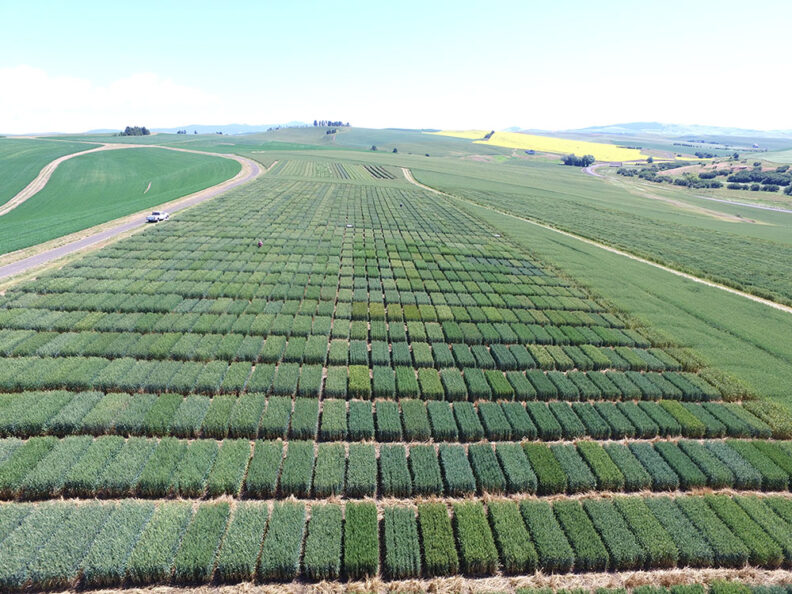
Recent releases from WSU include Nova AX, a soft white winter wheat cultivar with approval to be used in the CoAXium cropping system and Rydrych MZ, a soft white winter wheat cultivar with tolerance to high label rates of metribuzin. These releases, in conjunction with Clearfield cultivars, give growers additional herbicides to use to control grass weeds. Our efforts now include broadening the adaptability of these technologies, incorporating additional disease resistance traits, and improving the agronomics of all herbicide tolerant systems to support the diversity of growing regions across the state. We are excited about the upcoming field selections and have many breeding lines under release consideration with improved agronomics and disease resistance (along with good end-use quality) that we will be watching!
The USDA-ARS Western Wheat Quality Laboratory
Dr. Alecia Kiszonas
USDA-ARS Western Wheat Quality Laboratory
Alecia Kiszonas, Gail Peden, William J. Kelley, Shelle Lenssen, Janet Luna, Stacey Sykes, Robin Saam, Kelly Leonard, Daniel Zborowski, Galina Mikhaylenko, Julie Jenkins, Emily Klarquist, and Jessica Braden.
The mission of the USDA-ARS Western Wheat Quality Lab is two-fold: conduct milling, baking, and end-use quality evaluations on wheat breeding lines, and conduct research on wheat grain quality and utilization. The USDA-ARS Western Wheat Quality Laboratory web site provides great access to our research and publications.
Our current research publications include:
- Alfaro, G.M.S., McGee, R., and Kiszonas, A.M. 2025. Influence of genotype and environment on field pea composition and milling traits. J. Sci. Food Agric. 105:4884-4894.
- Carter, A.H., Balow, K.A., Shelton, G.B., Burke, A.B., Hagemeyer, K.E., Stowe, A., Wetzel, H., Worapong, J., Neely, C., Steber, C.M., Chen, X.M., and Kiszonas, A.M. 2025. Registration of ‘Sockeye CL+’ soft white winter wheat. J. Plant Reg. 19:e70009.
- Carter, A.H., Balow, K.A., Shelton, G.B., Burke, A.B., Hagemeyer, K.E., Stowe, A., Wetzel, H., Worapong, J., Neely, C., Steber, C.M., Chen, X.M., and Kiszonas, A.M. 2025. Registration of ‘Piranha CL+’ soft white winter wheat. J. Plant Reg. 19:e70010.
- Daba, S.D., McGee, R.J., and Finnie, S.M. 2025. Physicochemical, morphological, and digestibility properties of round and wrinkled pea starches. Cereal Chem. 102:611-627.
- Daba, S.D., Panda, P., Aryal, U.K., Kiszonas, A.M., Finnie, S.M., and McGee, R.J. 2025. Proteomics analysis of round and wrinkled pea (Pisum sativum L.) seeds during different development periods. Proteomics 25:2300363.
- Richter, J.K., Saunders, S.R., Ikuse, M., Finnie, S.M., and Ganjyal, G.M. 2025. Development of a novel pressure vessel system for the simulation of starch expansion—Methylated and regular waxy corn behave significantly different with and without cellulose inclusion. Starch – Starke 77: 202300235.
- Rottersman, M.G., Zhang, W., Zhang, J., Grigorean, G., Burguener, G., Carter, C., Vang, T., Hegarty, J., Zhang, X., Finnie, S.M., and Dubcovsky, J. 2025. Deletion of wheat alpha-gliadins from chromosome 6D improves gluten strength and reduces immunodominant celiac disease epitopes. Theor. Appl. Genet. 138:94.
Updates from the Oregon State University Wheat and Barley Breeding Programs
Margaret Krause1, Ryan Graebner1, Christina Hagerty2, Andrew Ross1, Teepakorn Kongraksawech1, Vishal Singh1, Matias Dominguez1, Mark Larson1, Adam Heesacker1, Vivien Hansen1, Nathalia Moretti1, Hilary Gunn1, Matthew Brooke1, Scott Fisk1, Laura Helgerson1, and Travis Nickols1
1Dept. of Crop and Soil Science, OSU; 2Dept. of Botany and Plant Pathology, OSU
The Oregon State University (OSU) Wheat and Barley Breeding Programs are committed to developing wheat and barley cultivars that are agronomically competitive with strong disease resistance and superior end-use quality.
The programs are currently undergoing some exciting changes. Dr. Matias Dominguez recently joined the Wheat Breeding Program as a Postdoctoral Scholar to strengthen the program’s genomic selection research and implementation. Dr. Dominguez hails from Argentina, where he was most recently working as a sunflower breeder with Argentina’s National Agricultural Technology Institute. This summer, the Barley Breeding Program will wish Postdoctoral Scholar Dr. Matthew Brooke farewell as he transitions to an exciting new opportunity: he will join the International Maize and Wheat Improvement Center (CIMMYT) in Mexico to research biological nitrification inhibition (BNI) in wheat. BNI is a plant-mediate process whereby root exudates improve nitrogen use efficiency and reduce nitrous oxide emissions and leaching.
Within the Wheat Breeding Program, we continue to focus primarily on improving soft white winter (SWW) wheat, with smaller breeding efforts on hard red winter (HRW) and winter club. SWW variety ‘Gale’ is now available and being grown commercially in the Willamette Valley, and commercial-scale seed production of SWW variety ‘Mallory CL+’ is underway this summer. Last year we had been optimistic about the possible release of soil-borne wheat mosaic virus-resistant experimental line OR2180149, but it surprised us with low falling number issues at a few of the 2025 testing locations. This season, we are keeping our eyes on strong SWW contenders OR2210394, OR2210456, and OR2210457, which have improved test weight compared to previous OSU variety releases (Table 1). We are also watching CoAXium entries OR3230026 AX (SWW) and OR3230010H AX (HRW with soil-borne wheat mosaic virus resistance), which are in their third year of extension variety trials.
Table 1. The OSU Wheat Breeding Program’s entries in the 2026 OSU Extension Variety Testing Program.
| Year in OSU Extension Variety Testing | Market Class | Entry | Pedigree |
|---|---|---|---|
| Check | SWW | Rosalyn | NSL 99-4160/Tubbs |
| 5th | SWW | Gale | Rosalyn/OR2131615 |
| 4th | SWW | OR2180149 | OR2090540/Ladd |
| 2nd | SWW | OR2190671 | Ladd/NAWW44//Kaseberg |
| 1st | SWW | OR2210394 | Nixon//Goetze/Skiles |
| 1st | SWW | OR2210456 | ORH2041227/ORH2041269/3/Carstens V/Skiles//ORCF-102 |
| 1st | SWW | OR2210457 | ORH2041227/ORH2041269/3/Carstens V/Skiles//ORCF-102 |
| 6th | SWW CL+ | Mallory CL+ | Rosalyn/3/ORCF-103/AP100CL//OR2060371 |
| 3rd | SWW CL+ | OR2200083 CL+ | ORCF-103/AP100CL//OR2060371/3/Skiles//ORH031303/Skiles 's' |
| 2nd | SWW AX | OR3230013 AX | NW Tandem*3/CO14A136 |
| 1st | SWW AX | OR3230023 AX | OR2150343/4/Nixon/3/Nixon//WA8277*3/CO14A050 |
| 3rd | SWW AX | OR3230026 AX | Nimbus/3/Nimbus//WA8277*3/CO14A050/4/Tandem |
| 1st | Club | OR5190016 | Bobtail/Cara |
| 2nd | Club | OR5210096 | ARS06132-45C/Norwest Tandem |
| 5th | HRW | OR2190064R | OR2060099H/Norwest 553//Attitude |
| 4th | HRW | OR2190160R | Norwest 553/OR2040075H//OR2060061H/3/Norwest 553/OR2040075H//OR2060061H |
| 3rd | HRW | OR2190165R | OR2060099H/Norwest 553//Norwest 553/BC97ROM51W |
| 1st | HRW | OR2210099R | BC97ROM41W/OR2052055H//Norwest 553/3/OK12619//OR2060099H/Norwest 553 |
| 1st | HRW | OR2220147R | Norwest 553/BC97ROM51W//YR48-Norwest 553/3/Norwest 553 |
| 2nd | HRW AX | OR3230008H | OR2140074R*3/CO14A050 |
| 3rd | HRW AX | OR3230010H | Norwest 553/CO14A050//OR2150169R/CO14A050 |
Led by assistant breeder Scott Fisk, the Barley Breeding Program is hoping to see its new two-row winter malting variety ‘Top Shelf’ make the American Malting Barley Association’s Recommended Variety List. Top Shelf is the nation’s first winter growth habit, glycosidic nitrile-null (GN0) malting barley variety to be released and registered. Glycosidic nitrile is a precursor to a carcinogen that is synthesized during the distillation process. GN0 varieties are non-producers of glycosidic nitrile and are therefore favored by the distilling industry.
We sincerely thank the growers of Oregon and the greater Pacific Northwest region for their continued support of the OSU breeding programs. We greatly look forward to interacting with stakeholders throughout the rest of the year. As we are always looking for ways to improve our breeding programs and better serve the wheat industry, we welcome and greatly appreciate feedback from our stakeholders.
Keeping the Numbers Up: Preventing Low Falling Numbers in Wheat through Field, Greenhouse, and Molecular Tests
Scott Carle1, Rehana Parveen1,2, Corbin Chapman1, Abigail Holtz1, Amber Hauvermale1, Alison Thompson1,2, Andrew G. McCubbin1, and Camille M. Steber1,2
1Dept. of Crop and Soil Sciences, WSU; 2USDA-ARS Wheat Health, Genetics, and Quality Research Unit
The Falling Numbers method is used by the industry to detect grain shipments at risk for causing quality problems like cakes that fall and bread that sticks to the slicer. While this protects millers and bakers from risk, it can lead to severe discounts for farmers. This project seeks to lower the risk of discounts for farmers by breeding for resistance to low falling numbers. Genetic susceptibility to two kinds of weather can cause low falling numbers, 1) cold temperatures during the soft dough stage of grain filling (called LMA or later maturity alpha-amylase) and sprouting from rain before harvest (preharvest sprouting). Both result in elevated grain alpha-amylase which poses a risk to baking quality. This project leveraged 13 years of falling number testing on the WSU cereal variety trials (steberlab.org) to examine which field and greenhouse testing methods used on elite breeding lines best predict falling number in farmers’ fields and to identify molecular markers that breeders can use to select against this problem early in the breeding cycle.
A “Historical Variety Trial” of 414 winter wheat and 252 spring wheat lines that were tested for falling number between 2011 and 2022 were characterized using two methods of inducing preharvest sprouting and two methods of inducing LMA to see which best predicted natural field falling number problems. These four experiment types were performed for at least two years each between 2022 and 2025. A cool winter greenhouse experiment better predicted field falling number than cold treatment of spikes cut from the field. Moreover, alpha-amylase enzyme levels after rain were a better predictor of falling number than visible sprouting after misting spikes in the greenhouse. As each experiment only measured one of the causes of low falling numbers, it was reassuring to see that when they were combined in a model that included both preharvest sprouting and LMA, the correlations improved to a magnitude of 0.479 (Fig. 1).
DNA differences in 3 genes, MFT, MKK3, and LMA1, were characterized using KASP assays. Of these, only resistant (R) molecular markers in the MFT gene were associated with a clear improvement in preharvest sprouting, LMA and natural falling numbers in the variety trials (Fig. 2). While LMA1-C was associated with LMA resistance in Australian research, it was also associated with preharvest sprouting susceptibility and low falling number in our PNW wheat.
Evaluating Spectral Indices as Predictors of Wheat Yield Across Diverse Environments
Melinda Zubrod1, Logan Nering2, and Arron H. Carter1
1Dept. of Crop and Soil Sciences, WSU; 2Dept. of Mathematical Statistics, Montana State University
Farmers and researchers increasingly use satellite and drone imagery to estimate crop yield before harvest. Two of the most widely used tools are vegetation indices called NDVI and NDRE, which measure how plants reflect different wavelengths of light and are closely tied to crop health. Higher values of these indices should mean higher yield, but in practice the strength of that relationship changes substantially from year to year, and it has not been clear why. We set out to determine how much the NDVI-yield and NDRE-yield relationships vary across locations and which environmental factors explain those differences.
To do this, we analyzed grain yield from 20 field trials across 8 locations, including Almota, Davenport, Lind, Harrington, Kahlotus, Prescott, Ritzville, and Walla Walla, from 2021 to 2024. We used a Bayesian statistical model to estimate a separate vegetation index-yield relationship for each trial while accounting for location and year effects. We then used an algorithm called CERIS to test which precipitation and thermal based weather variables, and during which part of the growing season, best explained why these relationships were strong in some trials and weak or even reversed in others. To determine whether these findings would hold for new trials not included in the model, we validated them using leave one out cross validation.
Both NDVI and NDRE yield relationships varied substantially across trials, and differences in location and year accounted for a large share of yield variation. CERIS identified daily precipitation as the dominant environmental driver of the vegetation index yield relationship, far outperforming temperature-based variables such as growing degree days. The most robust finding was that mid-season precipitation, around days 130 to 159 of the year, explained NDVI yield relationships extremely well, and this held up under cross validation (r = 0.93, RMSE = 3.68), meaning the pattern transfers reliably to new trials (Table 1). NDRE’s strongest signal came from later season precipitation, days 155
to 190, but this relationship weakened considerably when tested on held out data (cross validated r = 0.65), indicating it is less transferable than the NDVI result. Temperature based variables were consistently weaker drivers for both indices. Overall, integrating crop imagery with key seasonal weather patterns offers a more reliable path to accurate yield forecasting.
Table 1. CERIS results and leave-one-out cross-validation (LOOCV) performance for NDVI and NDRE vegetation indices across three analytical groupings (all, early heading locations, late heading locations) and four environmental parameters: daily precipitation (Precip), growing degree days (GDD), photothermal time (PTT), and photothermal ratio (PTR). For each combination, the optimal environmental window (Range) was identified by maximum CERIS correlation (CERIS r).
Table 1. CERIS results and leave-one-out cross-validation (LOOCV) performance for NDVI and NDRE vegetation indices across three analytical groupings (all, early heading locations, late heading locations) and four environmental parameters: daily precipitation (Precip), growing degree days (GDD), photothermal time (PTT), and photothermal ratio (PTR). For each combination, the optimal environmental window (Range) was identified by maximum CERIS correlation (CERIS r).
| Index | Group | Parameter | Range (Julian Date) | CERIS r (larger is better) | LOOCV r (larger is better | RMSE (smaller is better) |
|---|---|---|---|---|---|---|
| NDVI | all | Precip | 21-36 | 0.658 | 0.534 | 10.566 |
| NDVI | all | GDD | 98-105 | 0.532 | 0.391 | 11.626 |
| NDVI | all | PTT | 98-105 | 0.533 | 0.391 | 11.625 |
| NDVI | all | PTR | 98-105 | 0.532 | 0.391 | 11.628 |
| NDVI | early | Precip | 130-159 | 0.947 | 0.926 | 3.68 |
| NDVI | early | GDD | 15-29 | 0.641 | 0.479 | 8.665 |
| NDVI | early | PTT | 15-29 | 0.635 | 0.466 | 8.748 |
| NDVI | early | PTR | 15-29 | 0.648 | 0.492 | 8.585 |
| NDVI | late | Precip | 172-179 | 0.826 | -0.564 | 16.107 |
| NDVI | late | GDD | 98-105 | 0.626 | 0.16 | 17.039 |
| NDVI | late | PTT | 98-105 | 0.627 | 0.162 | 17.016 |
| NDVI | late | PTR | 98-105 | 0.624 | 0.158 | 17.062 |
| NDRE | all | Precip | 21-129 | 0.649 | 0.527 | 9.304 |
| NDRE | all | GDD | 76-83 | 0.295 | 0.035 | 11.316 |
| NDRE | all | PTT | 76-83 | 0.295 | 0.035 | 11.317 |
| NDRE | all | PTR | 76-83 | 0.295 | 0.035 | 11.315 |
| NDRE | early | Precip | 155-190 | 0.959 | 0.654 | 7.308 |
| NDRE | early | GDD | 15-29 | 0.661 | 0.548 | 8.078 |
| NDRE | early | PTT | 15-29 | 0.656 | 0.538 | 8.143 |
| NDRE | early | PTR | 15-29 | 0.665 | 0.557 | 8.019 |
| NDRE | late | Precip | 172-179 | 0.644 | -0.765 | 12.668 |
| NDRE | late | GDD | 33-40 | 0.26 | -0.471 | 15.407 |
| NDRE | late | PTT | 183-190 | 0.301 | -0.209 | 14.187 |
| NDRE | late | PTR | 33-40 | 0.268 | -0.462 | 15.319 |
USDA-ARS Club Wheat Breeding
Kim Garland-Campbell1, Olufunke Ayegbidun2, Brian Bellinger1, Patricia DeMacon2, Ron Sloot2, Marita White2, and Aicha Djibo Waziri2
1USDA-ARS; 2Washington State University
The focus of the USDA breeding program is to develop high quality club wheat cultivars and to incorporate germplasm for disease resistance and improved nutrition into adapted wheat germplasm. The breeding program has yield trials in 13 locations across Eastern Washington, Idaho, and Oregon that allow us to test our promising new lines in a variety of different climates and endemic diseases, so we can release high-performing varieties adapted to specific PNW conditions. Several of these trials are conducted in collaboration with the WSU Winter Wheat breeding program, WSU Cereal Variety Testing Program (VTP), and Oregon State University (OSU) Wheat breeding program.
The top goals for 2026 are to 1) develop earlier maturing club wheat varieties with improved emergence and snow mold tolerance; 2) select club wheat cultivars that meet the quality specifications of our export customers; 3) reduce our breeding cycle time using ‘mini-bulk’ generation advance; 4) develop herbicide resistant club wheat cultivars in collaboration with the WSU Winter Wheat breeding program; 5) screen germplasm for resistance to eyespot, stripe rust, soil borne wheat mosaic virus, and falling numbers resistance; 6) assess and improve current concentrations of various minerals, essential nutrients, and fiber in wheat grain and flour.
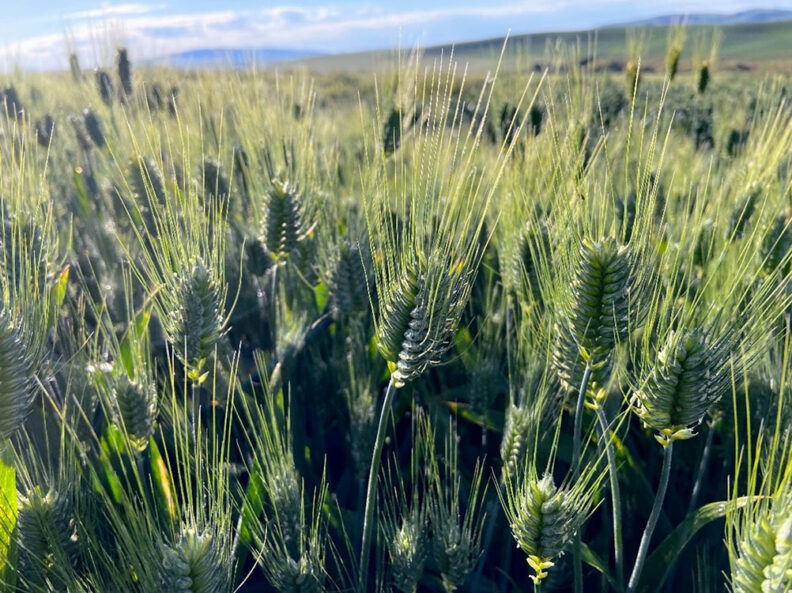
We evaluate cultivars and breeding lines for cold tolerance using freezing trials conducted at the WSU Plant Growth Facility. Data are provided to the WSU VTP and regional winter wheat breeders. We are evaluating breeding lines with two-gene resistance to Beyond® herbicide at all 13 field locations. We also have four Clearfield clubs in the WSU VTP Traited trials. Additionally, we are evaluating breeding lines with CO-AX resistance at six locations. Several of which are segregating for snow mold resistance. We screen for resistance to stripe rust and stem rust in collaboration with Xianming Chen’s and Bob Bruggeman’s groups. We evaluate breeding lines and regional nurseries for eyespot resistance at Spillman Farm, and with DNA markers.
We have nine breeding lines being evaluated in the WSU VTP Trials in 2026. Five are in the soft white winter trials and four, with the two-gene IMI resistance, trait are in the traited soft white trials. We have one breeding line, ARS14X1114RS-3CBW, being released as ARS Sloot this year, in both the North Idaho and the OSU Variety Trials, as well as the WSU VTP.
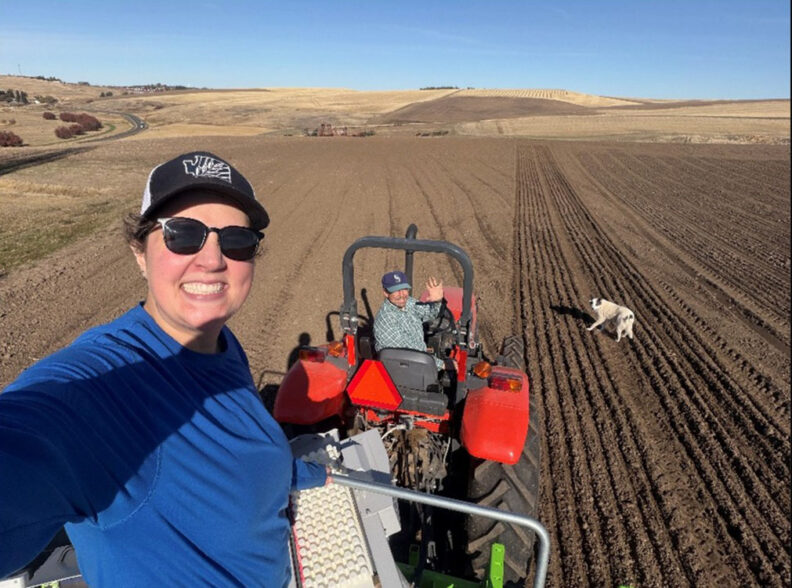
We will be releasing the new variety ARS Sloot, tested under the name ARS14X1114RS-3CBW. ARS Sloot is a soft white winter club with awns, intermediate heading date and height, has good resistance to stripe rust and eyespot foot rot, moderate resistance to falling number, and has excellent end use quality. ARS Sloot has been in WSU VTP Trials for three years. Overall grain yields have been similar to Piranha CL+ and generally better than existing club cultivars. This variety is intended to replace acres of Castella in the traditional club wheat growing regions of the Inland Northwest. Sloot is named after our technician Ron Sloot, who has been working in agriculture research at WSU for almost 30 years. He is retiring in May 2026 and has dedicated half of his life to helping growers through his dedication to research. Purified grain of ARS Sloot will be available for evaluation by interested seed growers for their fall 2026 trials.
Using Proteomics to Examine Wheat Alpha-Amylase Proteins
John H. Kelly1, Dru Mattei1, Andrew G. McCubbin2, Camille M. Steber1,3, Michael O. Pumphrey1, and Amber L. Hauvermale1
1Dept. of Crop and Soil Sciences, WSU; 2School of Biological Sciences, WSU; 3Wheat Health, Quality and Genetics Unit, USDA-ARS
Preharvest sprouting (PHS) results from rain, fog, or dew prior to harvest that causes mature grain to sprout/germinate on the spike. During a PHS event the alpha-amylase enzyme is highly expressed and degrades the starchy endosperm in wheat seeds. Breeding tolerant cultivars is an important part of addressing the PHS problem. Breeding efforts are aided by an increased understanding of PHS at the molecular level, especially of key proteins such as alpha-amylase. Proteomics is a powerful tool for exploring protein expression, small differences between similar proteins, and from where in the three wheat subgenomes proteins are expressed. Therefore, proteomics can be useful for understanding the differences in alpha-amylase expression during wheat germination and PHS. A targeted proteomics approach was used to identify isoforms of the alpha-amylase protein at different times during germination in the model variety ‘Chinese Spring’. A germination time course was used to model PHS and explore alpha-amylase expression (Fig. 1). Germination time points of 24, 48, 72, 96, 120 and 144 hours were examined alongside an ungerminated control (U). Alpha-amylase isoforms TaAMY1, TaAMY2 and TaAMY4 were detected, and different expression patterns were observed for each. TaAMY1 increased in expression first and was most abundant, followed by TaAMY2 and TaAMY4. The targeted proteomics approach revealed minute differences between alpha-amylases, even within isoforms, allowing for the identification of individual homeoforms such as TaAMY1.1, TaAMY1.2 and TaAMY1.3 (Table 1). The proportion of alpha-amylases belonging to each wheat subgenome, either A, B or D, was also determined. Differences in the most common homeoform and subgenome of origin were observed across isoforms. Some homeoforms were more common, such as TaAMY1.2 from subgenome D for the TaAMY1 isoform. Others were absent, such as TaAMY4.2 and TaAMY4.3 for the TaAMY4 isoform. The results suggest that TaAMY1 has a greater role in germination than TaAMY4, and that certain homeoforms such as TaAMY1.2 have a greater role than other homeoforms. Examining the ‘Chinese Spring’ variety with proteomics provides a framework for understanding other varieties and the regulation of alpha-amylase expression during germination, and by extension PHS.
Table 1. The percent of protein abundance from alpha-amylase homeoforms and subgenomes during germination within each alpha-amylase protein class (TaAMY1-4).
| Experiment | Isoform | Homeoform X*.1 | Homeoform X*.2 | Homeoform X*.3 | Subgenome A | Subgenome B | Subenome D |
|---|---|---|---|---|---|---|---|
| Germination | TaAMY1 | 0.259 | 0.685 | 0.046 | 0.107 | 0.017 | 0.876 |
| Germination | TaAMY2 | 0.022 | 0.042 | 0.946 | 0 | 0.968 | 0.032 |
| Germination | TaAMY4 | 1 | 0 | 0 | 0.927 | 0.073 | 0 |
| *X indicates TaAMY isoform for each respective row. |
Genetic and Environmental Stability of Arabinoxylan Content in a North American Wheat Panel
Ruth Uwugiaren1,2 and Michael Pumphrey1
1Dept. of Crop and Soil Sciences, WSU; 2Molecular Plant Sciences, WSU
Arabinoxylans (AX) are the predominant dietary fiber in wheat grain, classified as water-extractable (WE-AX) and water-unextractable (WU-AX) based on their solubility. Higher WU-AX is associated with significant health benefits, including supporting healthy gut bacteria, regulating blood sugar, and lowering the risk of heart disease. Beyond health benefits, WE-AX form influence several key quality traits, such as flour water absorption, which affects baking properties. These features make AX an important trait for wheat improvement, as it is easily influenced by the environment, genetics, and growing conditions. To evaluate genetic variation in AX content and the utilization of molecular markers for selection, 250 wheat lines from across North American spring wheat breeding programs were grown in replicated field trials across three locations in eastern Washington: Lind, WallaWalla, and Pullman during the 2024 and 2025 growing seasons. Total (TOT-AX) and water extractable arabinoxylans (WE-AX) content were measured from refined flour using a rapid colorimetric assay.
Significant genetic variation in AX content was observed across both years and locations. In 2024, TOT-AX ranged from 8.7 to 20.7 mg/g (mean 15.1), and WE-AX ranged from 2.7 to 12.0 mg/g (mean 6.2). In 2025, TOT-AX ranged from 9.7 to 22.0 mg/g (mean 6.2), and WE-AX ranged from 2.3 to 10.6 mg/g (mean 5.3) (Fig. 1). Both location and year have a strong influence on AX levels, with Pullman consistently having the lowest TOT-AX and WE-AX values in 2024 and Walla Walla having the lowest TOT-AX in 2025. Notably, a subset of lines maintained high AX content across environments.
Some varieties responded to favorable conditions more noticeably than others. A handful of lines stood out for both high AX content and consistency across sites and years.
Six DNA markers on wheat chromosomes 1B and 6B previously identified by researchers in other countries were tested for their ability to predict AX content in this North American wheat panel. Single-locus analysis of variance showed that the favorable alleles of these markers positively correlated with high AX content, while the unfavorable alleles correlated with low AX content (Fig. 2). These associations confirm the presence of these genomic regions within the North American wheat panel and demonstrate the potential of marker-assisted selection to identify high-AX lines. These findings identified wheat lines that have high AX content that are stable across multiple locations despite strong environmental influences. For growers, varieties with high and stable AX content mean less risk and may allow a marketable advantage as demand grows for nutritionally enhanced wheat. This study provides the evidence needed to make those choices with confidence.
Falling Number Survey Results for Field Year 2025
Alison L. Thompson1, Amber L. Hauvermale2, Karl Effertz2, Cat McGregor3, Ryan Greabner4, Ryan Higginbotham5, Kim Garland-Campbell1, Michael O. Pumphrey2, Max B. Wood2, Patricia DeMacon2, Vadim Jitkov2, Alex Brown2, and Dru Mattei2
1USDA-ARS; 2Dept. of Crop and Soil Sciences, WSU; 3The McGregor Company; 4Oregon State University, CBARC; 5HighLine Grain Growers
Falling number is a method used by the wheat industry to estimate grain quality. Falling number (FN) results are output in seconds, with a soft white industry cutoff of 300 seconds. Baked products made from flour with low falling number (<300 sec) are often sticky and misshapen, and not acceptable to consumers. Grain with low falling number (LFN) are subject to discounts, typically $0.01 per bushel per second below 300.
There are four known causes of LFN in the Pacific Northwest, 1) green kernels 2) preharvest sprouting (PHS), 3) late-maturity alpha-amylase (LMA), and 4) non-alpha-amylase induced low falling number (NAIL). Green kernels can be avoided by waiting until grain maturity to harvest while PHS, LMA and NAIL are brought on by untimely weather events. Some varieties are more tolerant of these events and will not have LFN while others are susceptible and frequently have LFN.
To mitigate risk of LFN, private and public testing programs participate in multi-location trials to reduce or eliminate the number of released varieties that are susceptible to LFN events. In 2025, 58 locations (39 winter and 19 spring wheat) were tested. These locations were managed by Washington State University (WSU), Oregon State University (OSU), the McGregor Company (TMC), and HighLine Grain Growers (HLGG) variety testing groups. Four checks each for spring and winter locations were used to identify the risk of LFN as either high, moderate, low, or none (Fig. 1). WSU and OSU managed locations identified with high and moderate risk were further evaluated for LFN by sampling two plots per entry from each location. Two winter and three spring trials with low risk were also evaluated for a total of 11 locations. Samples were sent to the Washington State Department of Agriculture (WSDA) laboratory in Colfax, WA for FN results. Samples were also evaluated for protein content and with the new FN-quick test to determine the potential cause of LFN for each location.
The survey identified 12 winter locations with high or moderate risk for LFN, while most winter and spring locations had either low or no risk (Fig. 1). The primary cause of LFN for both winter and spring locations was due to LMA. Other causes of LFN for winter locations included NAIL, a mix of NAIL and LMA as well as two locations with PHS. Plot results showed that many spring and winter entries had some tolerance to LMA with FNs greater than 300 seconds (Entries >300) (Table 1). These results indicate breeding efforts to improve tolerance to LMA have been successful. The majority of LFN were found in locations impacted by NAIL, where close to a third of the entries were susceptible with FNs less than 300 seconds (Entries <300) (Table 1). NAIL is a new cause of LFN, identified in 2024 and verified in 2025, so low tolerance was not unexpected. These results have been shared with both public and private breeders and seed dealers for selection decisions. A FN tolerance score for released varieties can be found in several wheat seed buying guides or by reaching out to Drs. Alison Thompson and Amber Hauvermale.
For more information, visit the the 2025 WSU Variety Trials page and the OSU variety trials page.
Table 1. Sampled plot results from the 11 locations tested, managed by WSU and OSU variety testing programs in 2025. These results do not reflect overall crop performance for the area.
| Location | Trial | Risk | Cause | Entries >300 | Entries <300 | Total Entries |
|---|---|---|---|---|---|---|
| Almira, WA | CLOAX | Moderate | NAIL | 16 | 8 | 24 |
| Almira, WA | HRW | Moderate | NAIL | 18 | 6 | 24 |
| Almira, WA | SWW | Moderate | NAIL | 23 | 19 | 42 |
| Harrington, WA | CLOAX | Low | NAIL | 18 | 6 | 24 |
| Harrington, WA | SWW | Low | NAIL | 33 | 9 | 42 |
| Mayview, WA | CLOAX | Moderate | LMA | 20 | 4 | 24 |
| Mayview, WA | SWW | Moderate | LMA | 30 | 12 | 42 |
| Pullman, WA | CLOAX | Low | LMA | 23 | 1 | 24 |
| Pullman, WA | HRW | Low | LMA | 24 | 0 | 24 |
| Pullman, WA | SWW | Low | LMA | 40 | 2 | 42 |
| Eureka, WA | CLOAX | Moderate | LMA/NAIL | 25 | 5 | 30 |
| Eureka, WA | HRW | Moderate | LMA/NAIL | 30 | 6 | 36 |
| Eureka, WA | SWW | Moderate | LMA/NAIL | 48 | 12 | 60 |
| Moro, OR | SWW | High | LMA/NAIL | 46 | 8 | 54 |
| Reardan, WA | CLOAX | Moderate | LMA | 21 | 3 | 24 |
| Reardan, WA | SWW | Moderate | LMA | 31 | 8 | 39 |
| Moses Lake, WA | HRW | High | PHS | 17 | 7 | 24 |
| Moses Lake, WA | SWW | High | PHS | 23 | 13 | 36 |
| Farmington, WA | SWS | Low | LMA | 19 | 5 | 24 |
| Plaza, WA | SWS | Low | LMA | 22 | 2 | 24 |
| Plaza, WA | HRS | Low | LMA | 29 | 1 | 30 |
| Reardan, WA | SWS | Low | LMA | 17 | 7 | 24 |
| Reardan, WA | HRS | Low | LMA | 26 | 3 | 29 |
Development of Higher Antioxidant Blue-Grained Wheat with Improved Production Potential
Ruth Uwugiaren1,2, Sheri Rynearson1, and Michael Pumphrey1
1Dept. of Crop and Soil Sciences, WSU; 2Molecular Plant Sciences, WSU
Blue and purple-colored wheat grains have attracted growing interest for specialty baked products and health-conscious consumers due to their high antioxidant and anti-inflammatory properties. The blue grain color in wheat originates from an anthocyanin-expressing gene in intermediate wheatgrass (Thinopyrum ponticum) called Blue Aleurone (Ba1). This anthocyanin-expressing gene was introduced into cultivated wheat through specialized crossing techniques. However, a longstanding challenge in using wild relative genes in crop breeding is that the introduced segment of foreign DNA is often much larger than needed, bringing along unwanted genes that can reduce yield, quality, or adaptability, a problem known as linkage drag. This study used a population of 182 backcross lines derived by crossing soft white spring wheat ‘Fielder’ with enhanced chromosome pairing (recurrent parent) with a blue-grained donor line to identify lines having the most Fielder background while retaining the Ba1 gene.
Using a 4,000-marker genotyping panel that surveys the entire wheat genome, we quantified the recurrent parent genome recovery (RPGR) across all lines, finding an average of 68.3% (Fig. 1). Applying selection criteria of 75% Fielder background recovery within the introgressed region, combined with above-average genome-wide recovery, we identified ten priority breeding lines retaining the Ba1 gene within a defined chromosomal interval.
From the ten selected lines, lines having more orange region and lesser purple region were advanced as top candidates (Fig. 2). These selections offer growers a pathway toward blue-grained wheat varieties that combine the nutritional benefits of anthocyanin-rich grain with the agronomic performance of an adapted North American background.
Low Falling Number in Wheat: What to Know and Ways to Manage
Amber L. Hauvermale1 and Alison L. Thompson1,2
1Dept. of Crop and Soil Sciences, WSU; 2USDA-ARS
A low falling number (LFN) in wheat can cause downstream product quality issues that result in significant economic losses for producers. Identifying the cause is critical as management options from the field to export may be available but depend on why a falling number is low. The current guide addresses frequently asked questions about LFN and highlights potential management strategies to minimize impact on-farm and at the elevator.
What are the types of LFN?
Key causes of LFN in the Pacific Northwest are 1) green kernels, 2) late-maturity alpha-amylase (LMA), 3) preharvest sprouting (PHS), and 4) non-alpha-amylase induced low falling number (NAIL). Except for NAIL, all other causes result from elevated levels of the enzyme alpha-amylase. Equally important is that LMA, PHS, and NAIL result form weather events at distinct stages in grain development.
Is alpha-amylase bad?
No, alpha-amylase is an important enzyme in seeds critical during germination. However, when levels are too high in flour, alpha-amylase can cause starch breakdown and reduced viscosity which can negatively impact baking quality. Unlike green kernels, LMA, and NAIL, the impact of alpha-amylase is amplified in PHS because in addition to alpha-amylase, other starch and cell wall degrading enzymes are released as part of the germination process.
What is the difference between grain soundness and end-use quality?
Grain soundness describes grain free of visible defects, and that meets industry thresholds for falling number (FN). For soft white wheat, the threshold is 300 seconds or higher. End-use quality describes the performance of a wheat variety in baked products. Wheat with preferred end-use quality may be susceptible to low FN, and sound wheat may have poor end-use quality. It is important to refer to the preferred variety guide for information end-use quality and to refer to Variety Trial information to learn more about FN performance. For more information, on wheat quality testing visit the Western Wheat Quality Lab site.
How is the type of LFN determined?
LFN causes are determined by a combination of the following: 1) visible and physical assessment of grain characteristics (grain color, visible sprouting, presence of black point, protein content), 2) gathering information about the convergence of weather events during grain developmental stage (milk, soft dough, and harvest maturity, and 3) using diagnostic tests that evaluate viscosity like the FN method, and alpha-amylase activity like the Total Target for Sprout Damage test. For more information please visit the Small Grains site.
If I have LFN issues, do management options exist and where do I get information about FN for varieties I am interested in growing?
Yes, management options exist but vary depending on the underlying cause of LFN and logistics at the farm and at the elevator. Table 1 outlines a practical framework for LFN type, characteristics, cause, relative level of risk, and highlights potential management options. The most important long-term management option is to select varieties with tolerance to issues when possible. For information about variety performance please visit the Variety Testing page on the Small Grains Site and the Variety Trials page on the Oregon State University site.
Table 1. LFN types, common characteristics, causes and risks for blending, and management options.
| LFN Type | Characteristics | Cause and Risk | Management Options |
|---|---|---|---|
| Immature seeds | Green seeds - High alpha-amylase | Harvested too early - High Risk | On-farm: Delay harvest. No post-harvest options. |
| LMA | No visual signs or symptoms - High alpha-amylase | Cold shock at soft dough - Moderate Risk | On-farm: Select tolerant varieties. Delay harvest as time in the field helps to reduce impact. On-farm or Elevator: Store if possible as falling number improves with time. |
| PHS | None - visible sprout, or black point. High alpha-amylase | Moisture at maturity - High Risk | On-farm: Select for tolerance. No post-harvest options. Elevator: Limited options because blending can be difficult. |
| NAIL | No visual signs or symptoms - No alpha-amylase | Freeze/stress at milk stage. Low protein | On-farm: None. Elevator: Intentional bending may be an option as there is no alpha-amylase. |
Developing a Winter Wheat (Triticum aestivum) Growing Degree Day Model
Morgan Menaker1, Aaron Esser1, Rachel Wieme1, David Crowder2, and Robert Meadows3
1WSU Extension; 2Dept. of Entomology, WSU; 3Dept. of Crop and Soil Sciences, WSU
The WSU dryland cropping systems team has been collecting phenology (growth stage) data over the 2025-2026 winter wheat growing season to gather preliminary data from four commonly planted soft white winter wheat varieties. LCS Shine, Castella, Sockeye CL+, and Piranha CL+. Wheat maturity is often expressed as “early,” “medium” or “late” with combinations of the aforementioned. Numeric values, like heading days via the Julian calendar, are assigned for only a few Feekes growth stages. This differs from other major commodities. Soybeans are assigned maturity groups (MG), and corn relative maturity (RM). This team of researchers begs the question, why not wheat? The WSU variety testing program provides an opportunity to capture wheat at specific growth stages across different environments. For this year, data are collected from Anatone, Pullman, St John, Mayview, Dayton, Walla Walla, and Eureka. Growth stages we wanted to capture included Feekes 5 (head 0.5 inches above the crown), and Feekes 10 (boot). These stages were chosen based on making agronomic decisions like herbicide, fertilizer, and fungicide applications. The goal is to integrate the model with WSU’s Decision Aid System, to provide growers, and crop advisors a platform to explore how wheat is growing in the current year, against previous years, and forecast when certain varieties will be at certain stages.
Utilization of Genomic Selection in the WSU Winter Wheat Breeding Program
Peter Schmuker and Arron Carter
Dept. of Crop and Soil Sciences, WSU
Wheat farmers in Washington’s dryland production region know better than most that no two growing seasons are alike. A variety that thrives in a wet year may struggle through a drought, and a line that looks promising in one location may disappoint in another. For plant breeders, this creates a lasting challenge: how do you identify the best new varieties when every year’s test results tell a slightly different story? The WSU Winter Wheat breeding program has been using a tool called genomic selection to help tackle that question. This approach reads thousands of DNA markers from each plant and combines that genetic fingerprint with historical trial data to predict how a new line will perform before it ever reaches the field. By training a statistical model on multiple years of yield, disease, and quality
data collected across many locations, we can identify which new lines have the genetics to produce well and hold up under variable conditions, rather than relying on a single season’s data.
One of the less obvious advantages of genomic selection is the accuracy it brings to the earliest stages of the breeding process. When new lines are first evaluated for any phenotype, there are far too many experimental genotypes and too few resources to evaluate each one with replication. In the past, this meant early-generation selections were made with relatively little data and a lot of uncertainty. DNA markers change that equation by allowing the program to borrow information from closely related lines that share much of the same genetic background. When a relative has an extensive performance record, that information can be used to sharpen the prediction for a newer line that has not yet been widely tested. The result is that the breeding program can now evaluate more experimental lines at these early stages while improving the accuracy of those evaluations, something that was not possible before genomic selection. This gives every promising new line a fair chance to be further evaluated before it gets cut, improving the odds that the next breakthrough variety does not slip through the cracks.
Wheat from Eastern Washington must meet the stringent end-use quality expectations of the export market, and any variety released from the WSU Winter Wheat breeding program must clear that bar. Evaluating milling and baking quality is one of the most expensive and time-constrained steps in the breeding pipeline. Each quality test requires a substantial grain sample, specialized laboratory equipment, and trained technicians, and the results for a single line can cost over a hundred dollars per sample. In contrast, genotyping a line costs around fifteen dollars and that marker profile is generated once and reused for every trait prediction. The turnaround from harvest to the next planting season leaves a narrow window to complete quality testing, meaning that advancement decisions for hundreds of experimental lines must be made before laboratory results are available. DNA markers offer a way around this bottleneck because a line’s genetic fingerprint is available months before harvest. By training genomic prediction models on a historic dataset of end-use quality results from the Winter Wheat Breeding Program, we found that marker-based predictions for traits like flour yield, test weight, cookie diameter, and flour swelling volume are already comparable in accuracy to a single trip through quality testing, and for some traits the marker prediction alone outperforms a single laboratory measurement as shown in Figure 1.
More importantly, the use of markers in conjunction with a single recorded phenotype offers an improvement over phenotyping alone, showing that a single round of quality phenotyping can be enhanced through the use of genomic selection. Because marker data is generated once and reused across every trait and every selection decision, the per-line cost of genomic prediction drops as the program expands, while the cost of each additional phenotype evaluated increases. Together with yield and disease resistance predictions, marker-based predictions allow the WSU Winter Wheat breeding program to make faster, better-informed advancement decisions and ensure that the varieties moving through the pipeline are competitive not just in the field but in the traits that matter to millers, bakers, and overseas buyers.
Strategic Multi-QTL Pyramiding: Breeding Spring Wheat with Enhanced Yield
Adele Jamalzei, Sheri Rynearson, Michael O. Pumphrey, and Arron H. Carter
Dept. of Crop and Soil Sciences, WSU
Wheat breeders face a persistent challenge: improving one yield-related trait often comes at the cost of another. For example, breeding for more grain number can reduce individual grain size, and increasing tiller number can dilute the resources available for grain filling, limiting the weight of each grain. To address this, we combined four different genes, all with known impact on yield related traits, into two spring wheat varieties, Kelse and Scarlet, to evaluate the effect of combining multiple yield-related genes on final grain yield. One gene increases tiller number, one increases grain size and weight, and one increases flowering time to extend the grain-filling period. The fourth gene is variety-specific: the gene from Kelse is associated with increased grain number, and the gene from Scarlet increases grain weight. The genes were sourced from Kingbird and a high-biomass line called PI683503, creating four unique combinations: Kelse-Kingbird, Kelse-PI683503, Scarlet-Kingbird, and Scarlet-PI683503. In 2025, 48 experimental lines were evaluated at three locations with 3 replications: Othello, Almota, and Pullman, WA.
In 2025, pyramided lines produced improvements in yield-related traits across all three locations, with the direction and magnitude of response depending strongly on which parents were used. In Kelse-PI683503, pyramided lines produced significantly more tillers and productive tillers across all three locations, up to 27% more, and significantly more grains per spike at Almota and Pullman, 8 to 9% more compared to non-pyramided lines. Importantly, this combination showed that the Kelse parent, which is associated with increased grain number, worked together with the tillering gene to increase both traits at the same time. Heading date was also significantly later in pyramided lines across all three locations. Individual grain weight and dimensions were reduced in this combination, indicating a trade-off between grain number and grain size (Table 1-3). As a result, grain yield trended 6 to 9% higher, but did not reach statistical significance in 2025.
Scarlet-PI683503 demonstrated a different pathway. Grain weight increased significantly across all three locations, and grain width increased significantly at Othello and Pullman. Tiller number and productive tiller number showed a negative but non-significant trend across all three locations. This suggests that when the Scarlet parent, which is linked to producing heavier grains, is combined with PI683503, the plant prioritizes grain weight over grain number and tiller production, resulting in a negative, but non-significant, grain yield trend across all three locations. Scarlet-Kingbird showed significant productive tiller increases at Almota, and significant tiller and productive tiller increases at Othello and Pullman. Grain yield trended positively across all three locations, grain weight increased at Othello and Pullman, and grain number increased at Almota and Pullman, although none of these increases were statistically significant. Kelse-Kingbird showed no significant response at any location for any trait, although tiller number, productive tiller number, grain weight, grain length, and grain yield trended positive (Tables 1-3).
Three out of four gene combinations trended toward higher grain yield in 2025, though none reached statistical significance in a single year. To confirm these findings and strengthen the model with a larger dataset, the same trials are being repeated in 2026 at all three locations. With two years of combined data across six location-years, analysis will be conducted to evaluate if the gene combinations have a significant impact on increased grain yield.